Seborrhoeic Keratosis Removal Nottingham
Professional Seborrhoeic Keratosis & Seborrhoeic Wart Removal
Seborrhoeic keratoses are extremely common benign skin growths that can become more noticeable with age. They may appear as raised, rough, waxy, brown, tan or darker patches and are sometimes described as seborrhoeic warts, age warts or age-related skin growths.
At Park Laser & Beauty Clinic in Nottingham, we offer professional assessment and cosmetic removal of suitable benign seborrhoeic keratoses.
Depending on the size, thickness, location and characteristics of the lesion, treatment options may include:
- Advanced electrolysis / thermolysis
- Plasma treatment
- Cryotherapy
- Other suitable lesion-removal techniques following assessment
We do not use the same method for every lesion. Your skin is assessed first and the most appropriate treatment option is recommended according to the individual lesion.
Free consultation available at our Nottingham city-centre clinic.
What Is Seborrhoeic Keratosis?
Seborrhoeic keratosis is a common non-cancerous skin growth.
They become increasingly common with age and can develop gradually over many years.
A seborrhoeic keratosis may look:
- Brown
- Tan
- Beige
- Grey
- Dark brown
- Almost black
- Waxy
- Rough
- Scaly
- Raised
- Flat or slightly raised
- As though it has been “stuck onto” the surface of the skin
Some are very small, while others become considerably larger and thicker.
A person may have just one seborrhoeic keratosis or develop many lesions across different areas of the body.
Are Seborrhoeic Keratoses the Same as Warts?
No.
Seborrhoeic keratoses are sometimes called seborrhoeic warts, but they are not viral warts.
Ordinary warts are associated with the human papillomavirus (HPV), whereas seborrhoeic keratoses are benign skin growths and are not contagious.
You cannot catch a seborrhoeic keratosis from another person.
The term “seborrhoeic wart” is therefore a common descriptive name rather than meaning that the lesion is a viral wart.
What Causes Seborrhoeic Keratosis?
The exact reason an individual develops seborrhoeic keratoses is not always clear.
They are strongly associated with ageing and may also run in families.
It is common for the number of lesions to increase over time.
They are not caused by poor hygiene and they are not contagious.
Where Do Seborrhoeic Keratoses Develop?
Seborrhoeic keratoses can develop on many areas of the face and body.
Common locations include:
- Face
- Temples
- Forehead
- Neck
- Chest
- Back
- Shoulders
- Abdomen
- Arms
- Legs
They may occur individually or in clusters.
Clients often seek treatment because a lesion is cosmetically noticeable, catches on clothing or jewellery, becomes irritated or simply becomes more prominent over time.
Seborrhoeic Keratosis Removal Nottingham
At Park Laser & Beauty Clinic, treatment starts with an assessment.
We consider:
- Size
- Thickness
- Colour
- Location
- Number of lesions
- Whether the lesion is flat or raised
- Skin type
- Relevant medical history
- Previous treatment
- Whether the lesion appears suitable for cosmetic removal
Once the lesion has been assessed, we can discuss the most appropriate removal method.
Advanced Electrolysis / Thermolysis for Seborrhoeic Keratosis
Advanced electrolysis, sometimes referred to as thermolysis for skin blemishes, can be used for selected benign skin lesions.
A very fine probe is used to deliver controlled electrical energy to the targeted tissue.
Depending on the lesion, this may allow the practitioner to gradually reduce or remove the unwanted growth.
Advanced electrolysis may be particularly useful for selected smaller or more superficial lesions.
Suitability depends on the individual seborrhoeic keratosis and will be assessed before treatment.
Plasma Treatment for Seborrhoeic Keratosis
Plasma technology may be suitable for selected raised or superficial benign skin lesions.
The device creates a controlled treatment effect on the targeted tissue.
The treated area then undergoes a healing process and may temporarily form a small crust.
Plasma is not automatically the best method for every seborrhoeic keratosis.
The lesion’s size, thickness, location, pigmentation and the client’s skin type need to be considered before deciding whether plasma treatment is appropriate.
Cryotherapy for Seborrhoeic Keratosis
Cryotherapy uses controlled cold to treat selected unwanted skin lesions.
It may be suitable for some seborrhoeic keratoses depending on their:
- Size
- Thickness
- Location
- Skin type
- Appearance
Following treatment, the lesion and surrounding skin can temporarily change appearance while healing.
Pigmentary changes can occur following cryotherapy, particularly in some skin types, so suitability must be assessed carefully.
Which Treatment Is Best for Seborrhoeic Keratosis?
There is no single method that is best for every seborrhoeic keratosis.
A small superficial lesion may require a different approach from a large, thick or highly pigmented lesion.
At Park Laser & Beauty Clinic, we have access to different treatment methods, allowing treatment to be selected according to the individual concern rather than using one device for everyone.
During consultation, we will explain:
- Which treatment method may be suitable
- What the procedure involves
- Expected healing
- Possible risks
- Likely number of treatments
- Aftercare
- Cost
Seborrhoeic Keratosis Removal on the Face
Seborrhoeic keratoses can develop on visible areas including the forehead, temples, cheeks and sides of the face.
Facial lesions require careful assessment because several different skin conditions can look similar.
Depending on the lesion, treatment may involve advanced electrolysis, plasma or another appropriate method.
Particular care is taken when treating cosmetically sensitive facial areas.
Seborrhoeic Keratosis Removal on the Neck
Raised seborrhoeic keratoses can develop around the neck and may catch on:
- Clothing
- Collars
- Jewellery
- Necklaces
They can sometimes be confused with skin tags or other benign skin growths.
We first assess the lesion and then recommend the appropriate treatment.
Seborrhoeic Keratosis Removal on the Back & Body
Seborrhoeic keratoses commonly occur on the chest, back and torso.
Some clients develop numerous lesions across these areas.
Where multiple lesions are present, we can assess the number, size and treatment area and advise whether they can be treated within one appointment or whether treatment should be divided between several sessions.
Multiple Seborrhoeic Keratosis Removal
It is common to have more than one seborrhoeic keratosis.
If you have multiple lesions, we can assess them during the same consultation.
The treatment plan will depend on:
- Number of lesions
- Size
- Thickness
- Location
- Treatment time required
- Treatment method
- Individual skin response
For larger numbers of lesions, treatment may be divided into separate appointments.
Seborrhoeic Keratosis or Mole?
Seborrhoeic keratoses can sometimes be mistaken for moles because both can be brown, dark or raised.
However, they are different types of skin lesion.
A typical seborrhoeic keratosis often has a waxy, rough or “stuck-on” appearance, while a mole is formed from melanocytes, the pigment-producing cells of the skin.
It is important not to assume that every brown or raised lesion is a seborrhoeic keratosis.
If there is uncertainty about a pigmented lesion, appropriate medical assessment may be required before cosmetic treatment.
Seborrhoeic Keratosis or Skin Tag?
Skin tags are generally soft, flesh-coloured growths that may hang from the skin by a small stalk.
Seborrhoeic keratoses tend to be firmer and may have a rough, waxy or textured surface.
Both are commonly benign, but the treatment method may differ.
Park Laser & Beauty Clinic offers treatment for a range of suitable benign skin concerns, including:
- Seborrhoeic keratoses
- Skin tags
- Cherry angiomas
- Warts
- Milia
- Selected benign lesions
Each concern is assessed individually before treatment.
Can Seborrhoeic Keratosis Become Cancerous?
Seborrhoeic keratoses themselves are generally benign.
However, the important issue is that some other skin lesions can resemble a seborrhoeic keratosis.
For that reason, an unusual, changing or uncertain lesion should not simply be cosmetically removed without appropriate assessment.
We may advise you to seek assessment from your GP, dermatologist or another appropriate medical professional before treatment if there is any uncertainty.
When Should I Have a Skin Lesion Medically Checked?
Please seek appropriate medical assessment if a lesion:
- Has changed significantly in size, shape or colour
- Has developed an irregular appearance
- Is persistently bleeding without an obvious reason
- Is ulcerated or not healing
- Has recently changed rapidly
- Is persistently painful or inflamed
- Looks significantly different from your other lesions
- Has uncertain characteristics
- Has not been diagnosed and there is doubt about what it is
We provide cosmetic treatment for suitable benign lesions.
Where a lesion requires diagnosis or medical investigation, cosmetic treatment should wait until this has been appropriately addressed.
What Happens During Seborrhoeic Keratosis Removal?
Step 1 – Consultation
The lesion is assessed and we discuss your relevant medical history, previous treatments and expectations.
Step 2 – Treatment Selection
If the lesion is suitable for cosmetic treatment, we recommend an appropriate removal method.
This may include advanced electrolysis/thermolysis, plasma or cryotherapy depending on the lesion.
Step 3 – Treatment
The selected treatment is carefully applied to the targeted area.
Treatment time depends on the size and number of lesions.
Step 4 – Healing
The treated area may temporarily become red, darker or crusted.
The appearance changes gradually as the area heals.
Step 5 – Review
Some lesions may require further treatment depending on their thickness, size and individual response.
What Does the Skin Look Like After Treatment?
The appearance immediately after treatment depends on the treatment method.
You may experience temporary:
- Redness
- Swelling
- Tenderness
- Darkening
- Dryness
- Crusting or scabbing
The treated area should be allowed to heal naturally.
Do not pick, scratch or deliberately remove crusts or scabs, as this can interfere with healing and increase the risk of unwanted skin changes.
Detailed aftercare instructions will be provided.
Is Seborrhoeic Keratosis Removal Painful?
Sensation varies depending on:
- Treatment method
- Size of lesion
- Location
- Number of lesions
- Individual sensitivity
Clients may experience heat, tingling or brief discomfort during some treatment methods.
We will explain what to expect before proceeding.
Will Seborrhoeic Keratosis Removal Leave a Scar?
Any procedure that intentionally removes or destroys skin tissue carries some risk of:
- Scarring
- Pigmentation changes
- Prolonged redness
- Infection
- Changes in skin texture
The level of risk depends on the lesion, treatment method, treatment area, skin type and individual healing response.
We discuss relevant risks before treatment and provide appropriate aftercare.
Can Seborrhoeic Keratosis Grow Back?
A successfully treated lesion may remain cleared or significantly improved, but recurrence can sometimes occur.
Treatment also cannot prevent new seborrhoeic keratoses developing elsewhere.
People who are prone to them may continue to develop new lesions over time.
New lesions can be assessed separately.
How Many Treatments Will I Need?
Some suitable superficial lesions may respond to one treatment.
Thicker, larger or more resistant seborrhoeic keratoses may require further treatment.
It is not possible to guarantee complete clearance in a specific number of sessions before assessing the lesion and seeing how it responds.
Before & After Seborrhoeic Keratosis Removal

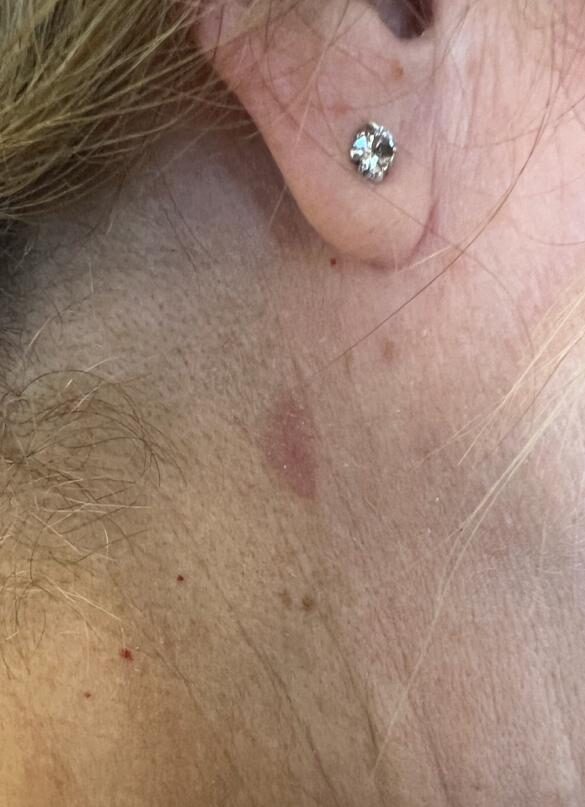
Our before-and-after photographs show treatments performed on real clients at Park Laser & Beauty Clinic.
Individual results vary according to the type of lesion, treatment method and healing response.
Why Choose Park Laser & Beauty Clinic for Seborrhoeic Keratosis Removal?
Multiple Treatment Methods
Rather than relying on one method for every lesion, we can assess whether advanced electrolysis/thermolysis, plasma, cryotherapy or another appropriate approach is best suited to the concern.
Individual Assessment
Treatment is selected according to the lesion’s characteristics and the client’s skin.
Single & Multiple Lesions
We can assess individual seborrhoeic keratoses as well as multiple lesions.
Face & Body Treatments
Suitable benign lesions can be assessed on both facial and body areas.
Established Nottingham Clinic
Park Laser & Beauty Clinic is based in Nottingham city centre and provides a range of laser, advanced electrolysis, skin and beauty treatments.
Free Consultation
If you are unsure whether your skin concern is suitable for treatment, arrange a consultation before booking a procedure.
Frequently Asked Questions
Do you remove seborrhoeic keratosis in Nottingham?
Yes. Park Laser & Beauty Clinic in Nottingham offers cosmetic removal of suitable benign seborrhoeic keratoses following consultation and assessment.
What is the best way to remove seborrhoeic keratosis?
There is no single best method for every lesion. Depending on the size, thickness, location, skin type and other characteristics, treatment may include advanced electrolysis/thermolysis, plasma or cryotherapy.
Is seborrhoeic keratosis the same as a wart?
No. Although sometimes called a “seborrhoeic wart”, seborrhoeic keratosis is not a viral wart and is not contagious.
Can you remove seborrhoeic keratosis from the face?
Suitable benign facial seborrhoeic keratoses can potentially be treated following assessment.
Can you remove multiple seborrhoeic keratoses?
Yes. We can assess multiple lesions and recommend an appropriate treatment plan. Larger numbers may need to be divided between appointments.
Can cryotherapy remove seborrhoeic keratosis?
Cryotherapy may be suitable for selected seborrhoeic keratoses. Suitability depends on factors including the lesion and individual skin type.
Can advanced electrolysis remove seborrhoeic keratosis?
Advanced electrolysis/thermolysis can be used for selected benign skin lesions. We determine suitability during consultation.
Can plasma remove seborrhoeic keratosis?
Plasma treatment may be considered for selected superficial or raised lesions following assessment.
Will it leave a mark?
Temporary redness, darkening, crusting or pigment changes can occur during healing. There is also a risk of scarring or longer-term pigmentation change with lesion-removal procedures.
Individual risks will be discussed before treatment.
Do I need a GP diagnosis?
Not every typical benign lesion will necessarily require GP assessment. However, if the lesion is uncertain, unusual, changing or has concerning characteristics, we may require appropriate medical assessment before cosmetic treatment.
Can I send a photograph first?
You may be able to send a clear photograph for an initial indication of treatment options and likely pricing.
A photograph cannot replace an appropriate in-person assessment or medical diagnosis where one is required.
Book a Free Seborrhoeic Keratosis Consultation in Nottingham
If you have a raised, rough or waxy skin growth that you believe may be a seborrhoeic keratosis, arrange a consultation with Park Laser & Beauty Clinic.
We can assess the concern and discuss whether advanced electrolysis/thermolysis, plasma, cryotherapy or another treatment option may be suitable.
Park Laser & Beauty Clinic
Suite 2, Lower Ground Floor
16 Regent Street
Nottingham
NG1 5BQ
Telephone: 0115 896 7878
Free consultation available.
Contact Park Laser & Beauty Clinic to arrange your seborrhoeic keratosis assessment in Nottingham.